



Aluminium prices hit four-year high as Iran war disrupts Gulf supply routes
- In Reports
- 06:34 PM, Mar 10, 2026
- Myind Staff
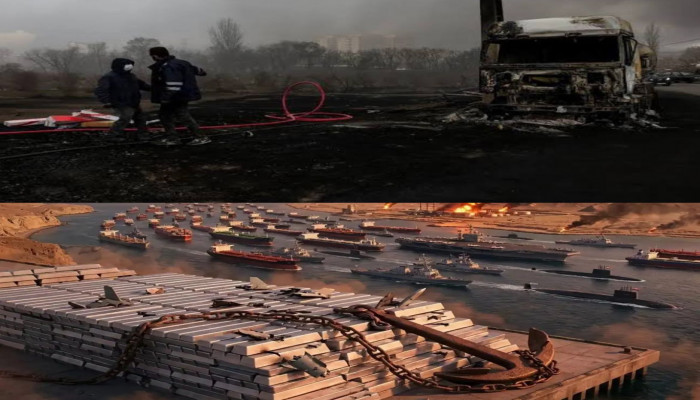
The ongoing US-Israeli war against Iran has caused a sharp rise in oil and gas prices. However, another important commodity has also been strongly affected by the conflict: aluminium. Prices of aluminium have climbed to their highest level in four years as the closure of the Strait of Hormuz has disrupted crucial trade routes from the Gulf region.
The Strait of Hormuz is one of the most important shipping routes in the world. The disruption caused by the war has affected the movement of goods from the Gulf, which has become a key supplier of aluminium to Western markets. Because of this situation, concerns about supply shortages have increased, pushing aluminium prices higher in global markets.
According to Reuters data, benchmark aluminium prices on the London Metal Exchange briefly touched $3,544 per metric ton on Monday, which is the highest level since March 2022. After reaching this level, prices eased slightly and were trading around $3,394 per ton. The rise in prices reflects growing fears that shipping disruptions may reduce supply in a market that was already tightening even before the conflict began.
The crisis demonstrated how geopolitical tensions in the Middle East can affect more than just energy markets. Industrial supply chains around the world depend heavily on aluminium exports from the Gulf, and any disruption in the region can impact global industries.
The Strait of Hormuz is widely known as a critical route for transporting oil and liquefied natural gas. But it also plays a very important role in the global aluminium trade. Data from the International Aluminium Institute shows that the Gulf region accounted for more than 8 per cent of global aluminium production last year.
More than 5 million metric tons of aluminium produced in Bahrain, Qatar, Saudi Arabia, and the United Arab Emirates are shipped through this strait every year to customers in Europe and the United States. With the conflict intensifying, the shipping route has effectively been shut down for aluminium shipments.
Reuters reported that the war has almost completely closed the Strait of Hormuz for aluminium shipments. This has blocked exports of finished aluminium while also stopping the import of key raw materials required for production. Gulf smelters depend heavily on imported bauxite and alumina, which are essential for making aluminium.
Shipping data shows that vessels carrying these raw materials are now changing their routes. Several bulk carriers that were originally heading toward the United Arab Emirates have diverted toward Asia after the strait became inaccessible.
The aluminium production process involves multiple stages. First, bauxite ore is refined into alumina, and then alumina is smelted into aluminium. The metal is widely used in industries such as transport, construction, and packaging. The current shipping disruption threatens all these stages of the supply chain at the same time.
According to Reuters, three large ships carrying bauxite with a total cargo of about 371,000 metric tons have already diverted away from the Gulf region. Another vessel carrying Australian bauxite that was originally heading to the Gulf is now heading toward China instead. Two other ships transporting alumina meant for Bahrain also appear to be changing their routes.
Because of these disruptions, Gulf smelters are facing a double problem. They are struggling to export finished aluminium while also finding it difficult to import raw materials needed to keep production running.
Analysts from ING warned about the seriousness of the situation. They said, “Extended disruption in the Strait would simultaneously choke alumina inflows and aluminium exports for Middle Eastern smelters,” adding that such a situation would “tighten global supply meaningfully.”
The crisis has already started affecting production in the region. On Tuesday, the Qatari smelter Qatalum began shutting down operations. The company’s shareholder, Norsk Hydro, declared force majeure to its customers.
Hydro explained the reason for the shutdown in an official statement. The company said, “The decision to shut down was made after the company's gas supplier informed it of a forthcoming suspension of its gas supply.”
QatarEnergy, which owns a majority stake in the Qatalum joint venture, had earlier announced that it was stopping the production of some downstream products, including aluminium. This decision came a day after liquefied natural gas production was suspended due to Iranian drone attacks.
Hydro also said that the shutdown of the smelter, which has an annual production capacity of 648,000 metric tons, is expected to be completed by the end of March. The company added that restarting the plant fully could take six to twelve months.
The aluminium market was already facing several challenges even before the Iran conflict began. China, the world’s largest aluminium producer, has capped its smelting capacity at 45 million tons, which limits further growth in production.
At the same time, Western markets have been adjusting to the gradual reduction of Russian aluminium in global trade after sanctions related to the Ukraine war.
Data from Reuters shows that inventories of aluminium on the London Metal Exchange have dropped sharply over the past year. Stocks fell by more than 330,000 tons in 2025 and continued to decline in early 2026.
Another factor adding to supply pressure is outside the Gulf region. Mining company South32 has announced that its Mozal smelter in Mozambique, which has a production capacity of 560,000 metric tons per year, will be placed on care and maintenance after it failed to secure a new electricity deal.
These supply concerns have pushed the aluminium market into backwardation, a situation where near-term contracts trade at higher prices than future deliveries. The premium for cash aluminium over the three-month contract rose to $47.4 per ton last week, the highest level since early 2022.
Analysts believe prices could rise even further if disruptions continue. ING warned that in a severe scenario, aluminium prices could briefly rise above $4,000 per ton, approaching the record levels seen during the energy crisis in 2022.
Growing role of the Gulf in aluminium production
The crisis also highlights how important the Middle East has become in global aluminium production. Over the past two decades, Gulf countries have built large aluminium smelting industries using abundant natural gas to power their operations.
Output from Gulf Cooperation Council countries has increased significantly, rising from about 2.7 million tons in 2010 to more than 6 million tons last year, according to Reuters. This rapid growth has made the region one of the biggest suppliers of aluminium to international markets.
Major facilities in the region include Aluminium Bahrain, Emirates Global Aluminium and Qatar Aluminium. These companies export primary aluminium as well as specialised alloys and semi-manufactured products.
Bahrain alone exported more than one million tons of alloy products last year and shipped aluminium products to around 70 countries, according to trade data cited by Reuters.
Europe has become increasingly dependent on these supplies because many of its own smelters have shut down due to high energy costs. ING estimates that the Middle East now accounts for about 30 per cent of Europe’s aluminium imports.
The United States also relies heavily on the region, which supplies more than 20 per cent of its imported aluminium.
Impact on Western markets and India
The disruption is already affecting Western supply chains. Aluminium Bahrain has declared force majeure on some shipments because logistics problems have made exports difficult. Qatar Aluminium has also started a controlled shutdown of production due to the instability in the region.
Analysts say buyers have limited alternatives because Western production has declined and Russian aluminium is restricted by sanctions. Marex analyst Ed Meir told Reuters, “The Europeans are particularly concerned, as the Gulf aluminium stoppage comes just as long-term supplier Mozal is going offline this month.”
India, however, may not face the same level of supply disruption as Europe or the United States. The country is itself a major aluminium producer with large integrated smelters operated by companies such as Hindalco and Vedanta that use domestic bauxite reserves.
Still, India imports certain grades of aluminium and alloys used in sectors such as automobiles, electrical equipment, packaging and engineering. Trade data shows that India imported about $590 million worth of unwrought aluminium alloys in 2023. Malaysia was the largest supplier with shipments worth about $184 million.
Gulf suppliers also play an important role. Qatar exported around $139 million, Bahrain $97 million, and the United Arab Emirates about $81 million worth of aluminium alloys to India in the same year. Together, these three countries accounted for roughly half of India’s aluminium alloy imports.
In the category of unwrought non-alloyed aluminium, India imported around $310 million worth of metal in 2023. Oman supplied about 37 per cent, while Qatar and the UAE together accounted for roughly 15 per cent.
These figures indicate that India’s exposure to Gulf supplies is lower than Europe’s heavy dependence. However, the country could still feel the impact through higher global prices. Aluminium is widely used in automobiles, power cables, railways, construction materials and consumer packaging.
If prices remain high, input costs for these industries could rise. At the same time, stronger global prices could benefit Indian aluminium producers by creating better export opportunities if shipments from the Gulf remain limited due to the disruption in the Strait of Hormuz.



 Loading...please wait
Comments