




Akhilesh Yadav ends I-PAC deal ahead of 2027 UP poll, cites funding issues
- In Reports
- 05:19 PM, May 06, 2026
- Myind Staff
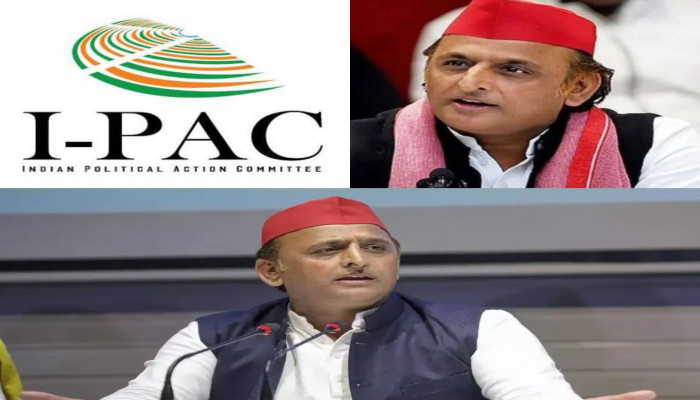
The Samajwadi Party has decided not to continue its association with election management firm I-PAC for the 2027 Uttar Pradesh Assembly elections. Party chief Akhilesh Yadav confirmed the decision on Wednesday, stating that financial constraints forced the party to step back from the agreement.
Speaking to reporters, Yadav made it clear that the decision was based on a lack of funds. In a lighter moment, he said, “We simply don't have funds. If you (the media) give us funds, we can hire another company.” He also clarified that the party had worked with I-PAC for a short period but could not continue due to financial limitations. “Yes, we had an association (with them). They worked with us for a few months, but we are not able to continue because we do not have that kind of funding,” he added.
Sources indicated that I-PAC, originally set up by strategist Prashant Kishor, was expected to focus on constituencies where the Samajwadi Party had narrowly lost in the 2022 Assembly elections. However, despite ending this partnership, the party is expected to continue working with another election management and social media firm, Showtime. This arrangement follows a separate contract that was signed about two months ago.
The decision comes at a time when I-PAC has faced setbacks in other states. The firm had worked with the All India Trinamool Congress and the Dravida Munnetra Kazhagam during the recent elections in West Bengal and Tamil Nadu. Both parties suffered major defeats in those polls. In West Bengal, the Bharatiya Janata Party won 207 out of 294 seats, dealing a heavy blow to the Trinamool Congress.
In Tamil Nadu, the DMK was defeated by actor Vijay’s newly formed Tamilaga Vettri Kazhagam (TVK). The scale of these losses was highlighted by the defeat of senior leaders. Mamata Banerjee and M. K. Stalin both lost their seats, even though they contested from strongholds.
Despite these developments, Akhilesh Yadav dismissed any link between these election outcomes and his party’s decision to end ties with I-PAC. He maintained that funding issues were the only reason behind the move.
The break-up also comes after legal troubles involving I-PAC’s leadership. Vinesh Chandel, who co-founded the firm along with Prashant Kishor and others, was arrested in a money laundering case linked to an alleged coal scam in West Bengal. The Enforcement Directorate carried out raids at his Delhi residence before taking him into custody in early April.
According to the agency, a ‘hawala’ operator connected to the alleged scam helped transfer large sums of money to Indian PAC Consulting Pvt Ltd, the company that runs I-PAC. The Enforcement Directorate also claimed that a system was created to circulate these funds and convert black money into white. It alleged that payments to I-PAC were made partly through official banking channels such as cheques and online transfers, while the remaining portion was received in cash through non-banking routes. Chandel was granted bail last week.
Although Akhilesh Yadav denied any connection, sources told NDTV that both Chandel’s arrest and the recent election results in Bengal and Tamil Nadu may have influenced the Samajwadi Party’s decision. These developments appear to have raised concerns within the party ahead of a crucial election.
The 2027 Uttar Pradesh Assembly election is expected to be a critical moment for the Samajwadi Party and its leader. The party is widely seen as the main opposition to the BJP in the state, and the outcome could shape its future political standing.
Recent political trends have also added pressure on opposition leaders across the country. After Mamata Banerjee’s defeat in Bengal, the DMK losing power in Tamil Nadu, and Arvind Kejriwal losing control of Delhi, the number of strong opposition figures challenging the BJP has reduced significantly.
There have also been concerns about I-PAC’s ability to manage election campaigns following these controversies. Reports suggest that the firm had started scaling back its operations in some states during the final weeks of recent election campaigns. This may have been due to pressure from the Enforcement Directorate’s investigation.
In Uttar Pradesh, I-PAC reportedly reduced its team size as well, which affected the Samajwadi Party’s preparation for the upcoming elections. Feedback from party workers at the ground level also played a role in shaping the final decision to end the partnership.
The move marks a significant shift in the Samajwadi Party’s election strategy as it prepares for the 2027 Assembly polls. While the party continues to work with other firms, the decision to part ways with I-PAC reflects both financial challenges and changing political calculations.



 Loading...please wait
Comments