




Agnikul tests first of its kind 3D-printed Agnilet rocket engine
- In Reports
- 08:05 PM, Nov 18, 2026
- Myind Staff
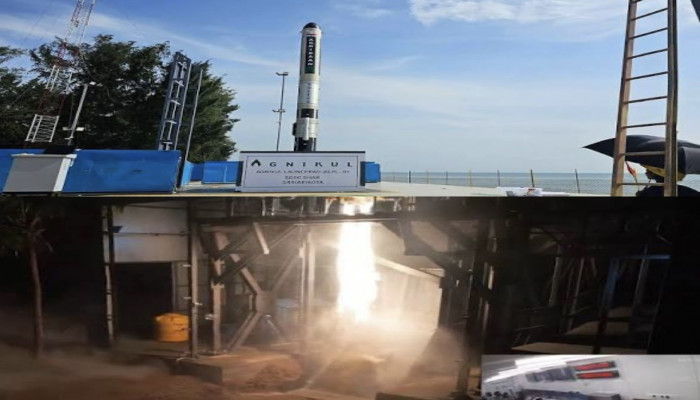
Chennai-based space startup Agnikul Cosmos has successfully test-fired its upgraded Agnilet rocket engine, taking another step towards Mission-02 of its Agnibaan launch vehicle. The company released footage showing the engine operating at different power levels, with engineers gradually increasing and reducing its thrust.
The video also captures bright, diamond-shaped patterns in the exhaust plume as the engine's power increases. These formations, known as Mach diamonds, occur when shock waves develop in high-speed exhaust gases.
The upgraded engine uses electric motor-driven pumps to push fuel into its combustion chamber. This replaces the pressure-fed system used during Agnibaan SOrTeD, the company's first suborbital test flight in May 2024. In a pressure-fed system, high-pressure gas pushes fuel and oxidiser from storage tanks into the engine. A pump-fed system uses mechanical pumps instead, allowing lighter tanks and better control over propellant flow.
Agnikul said the one-metre-tall Agnilet retains its single-piece, 3D-printed design. Its semi-cryogenic propulsion system runs on liquid oxygen and kerosene-based fuel. The latest test included operations at different thrust levels to help engineers assess the engine's performance under changing power conditions.
The company also conducted the test using a horizontal stand. This setup provides a clearer view of the exhaust plume and allows engineers to continue testing alongside the development of other hardware.
Founded in 2017 at IIT Madras, Agnikul is developing its Agnibaan rocket to carry small satellites into low Earth orbit.
On May 30, 2024, the company completed its Agnibaan SOrTeD mission, a 66-second suborbital flight that tested the rocket's engine, flight control and other systems. It was India's first rocket launch from a privately developed launchpad.
Mission-02 aims to bring Agnikul closer to an orbital launch while demonstrating technologies for recovering and reusing rocket hardware. The company has proposed a reusable booster and an upper stage designed for extended operations in space. However, it has not announced a confirmed launch date.
In September 2026, the government announced Rs 200 crore in research and development support for Agnikul's fully reusable Agnibaan programme. The initiative aims to develop a launch system capable of carrying out repeated missions, potentially lowering the cost of future launches through hardware recovery and reuse.



 Loading...please wait
Comments