




AFSPA will be removed from entire Northeast by 2027: Home Minister Amit Shah
- In Reports
- 12:32 PM, Jun 12, 2026
- Myind Staff
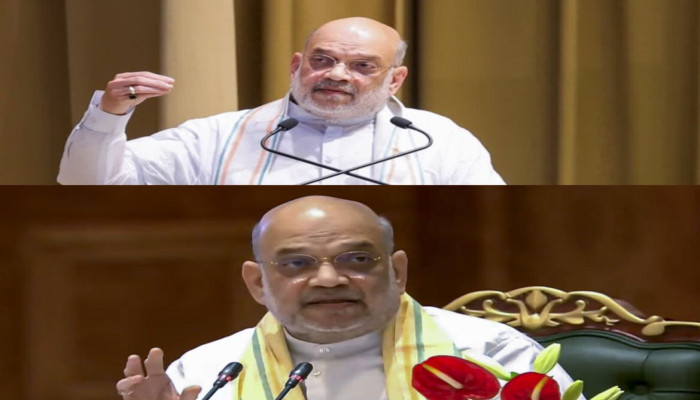
Union Home Minister Amit Shah has said that the Armed Forces (Special Powers) Act (AFSPA) may be removed from almost the entire Northeast by next year, with only one or two states likely to remain under its coverage. He announced during the signing of a tripartite Memorandum of Understanding (MoU) between the Centre, Assam, and Nagaland for mineral oil operations in the Assam-Nagaland border areas.
Speaking at the event, Shah said that reducing the areas covered by the AFSPA would be a clear sign of improving peace and security in the region. Expressing confidence about the future, he stated, "I am confident that barring one or two states, we will withdraw AFSPA from the entire Northeast next year."
The Home Minister described the agreement between the Centre and the two states as a historic development. According to him, the MoU has removed a major obstacle in Prime Minister Narendra Modi’s vision of transforming the Northeast into a developed and prosperous region. He said the agreement would create new opportunities for economic growth and resource development.
The MoU aims to facilitate oil and mineral exploration activities in the disputed area belt (DAB) along the Assam-Nagaland border. Exploration work in the region had remained stalled for more than three decades because of jurisdictional disputes and differences between the two states. The agreement is expected to bring an end to those long-standing hurdles and allow exploration activities to move forward.
Shah said the agreement would unlock significant opportunities for the Northeast’s natural resource sector. He noted that the region possesses not only oil and natural gas reserves but also large mineral deposits that could not be fully explored in the past due to law-and-order concerns. Highlighting the potential of the area, he said, “This will open new avenues for mineral exploration in the Northeast. The area not only has oil and gas but huge mineral deposits, which could not be explored due to law and order issues.”
The Home Minister also spoke about the economic benefits expected from the agreement. He said that a single MoU could increase the current extraction capacity of 1,000 to 1,500 barrels per day by nearly ten times. This, he added, would significantly boost energy production and contribute to economic growth in the region.
Referring to the scale of resources available, Shah said, “In one field alone, there are possibilities of recovery of more than Rs 15,000 crore. If we extract the oil deposits spread across Nagaland, we would be able to reduce dependence on foreign countries for our oil needs.” He stressed that greater domestic production could strengthen India’s energy security and reduce reliance on imported oil.
Shah also highlighted the central government’s focus on the Northeast over the past several years. He said that Prime Minister Narendra Modi has consistently prioritised the region and has visited it more frequently than any previous prime minister. According to him, these efforts have helped bring development and stability to an area that had long faced challenges related to insurgency and infrastructure.
The Home Minister pointed out that since 2019, the government has signed 12 agreements with different groups and state governments in the Northeast. These accords, he said, have played a major role in improving peace in the region. As a result, incidents of violence have declined by around 80 per cent over the period.
He further noted that the absence of consensus on issues such as resource exploration had affected the development of both Assam and Nagaland for many years. The newly signed MoU, he said, would help overcome those challenges and create opportunities for growth in both states. Emphasising the significance of cooperation between different levels of government, Shah said, “The development of both Assam and Nagaland remained hampered for a long time because a consensus could not be reached for an MoU. The avenue that opened today will open doors for development for both states. It is the best example of cooperative federalism.”
The agreement is expected to boost exploration activities, attract investment, and generate economic opportunities in the region. It also reflects the government’s broader efforts to strengthen peace and accelerate development across the Northeast.



 Loading...please wait
Comments