



Abuse alone not an offence under SC/ST Act unless caste-based intent is proven: Supreme Court
- In Reports
- 01:58 PM, Jan 21, 2026
- Myind Staff
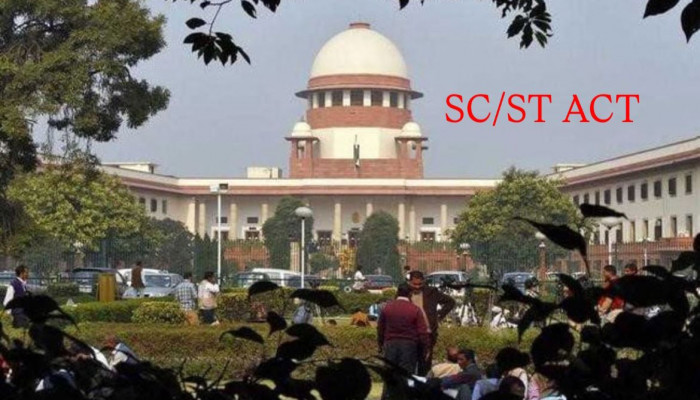
The Supreme Court of India has delivered an important ruling clarifying the scope of offences under the Scheduled Castes and Scheduled Tribes (Prevention of Atrocities) Act. The top court has held that merely using abusive or insulting language against a person belonging to a Scheduled Caste or a Scheduled Tribe does not automatically amount to an offence under the SC/ST Act. For the law to apply, there must be a clear and specific intention to insult or humiliate the victim because of their caste.
This ruling came while the Supreme Court was hearing a case related to Keshav Mahato, who had been accused of abusing a person from the Scheduled Caste community at an Anganwadi centre in Bihar. The court decided to cancel the criminal proceedings against Mahato, stating that the legal requirements for invoking the SC/ST Act were not fulfilled in this case.
The bench, comprising Justices JB Pardiwala and Alok Aradhe, examined the contents of the First Information Report (FIR) and the chargesheet filed against Mahato. After careful consideration, the court observed that neither document contained any allegation suggesting that the abuse was made on the basis of the complainant’s caste. According to the court, this absence of caste-based intent was a crucial factor.
The Supreme Court clearly explained that Section 3(1)(r) of the SC/ST Act lays down specific conditions that must be satisfied for an offence to be made out. The court stated that two essential requirements must be met. First, the complainant must belong to a Scheduled Caste or a Scheduled Tribe. Second, the insult or abuse must be directly related to and motivated by the complainant’s caste.
Explaining this legal position, the bench said, “For an offence to be made out, it must be shown that the accused intentionally insulted or intimidated the victim on the ground that the victim belonged to a Scheduled Caste or Scheduled Tribe.” This quote from the bench highlights that intention is a key element and cannot be assumed merely because the victim belongs to a protected community.
The case reached the Supreme Court after Keshav Mahato challenged a February 2025 order passed by the Patna High Court. The High Court had earlier refused to interfere with a trial court’s order that summoned Mahato to face trial under the SC/ST Act. Unhappy with this decision, Mahato approached the apex court seeking relief.
Upon reviewing the matter, the Supreme Court found that both the trial court and the Patna High Court had committed an error. The apex court noted that despite the lack of any allegation of caste-based abuse or intimidation in the FIR, the lower courts allowed the proceedings under the SC/ST Act to continue. This, according to the Supreme Court, was not in line with the legal requirements of the Act.
The court emphasised that the SC/ST Act is a special law enacted to protect members of the Scheduled Castes and Scheduled Tribes from discrimination, humiliation, and atrocities. However, it also made it clear that the provisions of the Act cannot be applied mechanically or without fulfilling the conditions clearly mentioned in the law.
By cancelling the criminal proceedings against Mahato, the Supreme Court reinforced the principle that the misuse or incorrect application of special laws must be avoided. The ruling does not dilute the protection given to Scheduled Castes and Scheduled Tribes but instead clarifies that the offence must be rooted in caste-based intent.
This judgment is significant as it provides clarity to courts, investigating agencies, and citizens about how Section 3(1)(r) of the SC/ST Act should be interpreted and applied. It underlines that while abusive behaviour is condemnable, it can only be punished under the SC/ST Act when it is clearly linked to the victim’s caste.



 Loading...please wait
Comments