



500% tariff threat over India as Trump approves Russia Sanctions Bill
- In Reports
- 04:54 PM, Jan 08, 2026
- Myind Staff
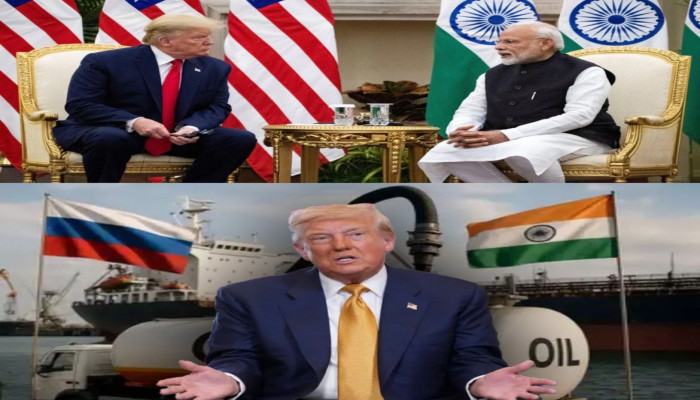
India is once again facing pressure from the United States after a proposed law that could impose extremely high tariffs on countries buying Russian oil received support from US President Donald Trump. The proposed legislation would allow the US to impose tariffs of up to 500 per cent on imports from countries that continue purchasing Russian oil.
The development comes after senior Republican leader and US Senator Lindsey Graham said that President Trump has “greenlit” the Russia sanctions bill. Graham stated that the bill would give the US President strong powers to act against countries such as India, China, and Brazil.
“This bill would give President Trump tremendous leverage against countries like China, India and Brazil to incentivise them to stop buying the cheap Russian oil that provides the financing for [Vladimir] Putin’s bloodbath against Ukraine,” Senator Graham said.
India has been specifically named as one of the countries that could be affected by this legislation due to its continued oil imports from Russia. According to Graham, the bill aims to stop the flow of money that supports Russia’s military actions in Ukraine.
Earlier this week, on January 5, Senator Graham said that Indian Ambassador to the US, Vinay Kwatra, had spoken to him about India’s efforts to reduce its purchases of Russian oil. Graham said that the ambassador requested him to convey this message to President Trump and asked him to “relieve the tariff” imposed on India.
Speaking to reporters while standing next to President Trump aboard Air Force One on Sunday, Graham discussed the tariff bill. The bill seeks to impose a 500 per cent levy on imports from countries that continue to buy Russian oil.
During the interaction, President Trump said that Prime Minister Narendra Modi “knew he was not happy” with India’s purchases of Russian oil. Trump also warned that Washington could raise tariffs on India “very quickly.”
On Thursday, Senator Graham released a statement confirming that President Trump had approved the sanctions proposal. “After a very productive meeting today with President Trump on a variety of issues, he greenlit the bipartisan Russia sanctions bill that I have been working on for months with Senator Blumenthal and many others,” Graham said.
He added that the timing of the bill was important. “This will be well-timed, as Ukraine is making concessions for peace and Putin is all talk, continuing to kill the innocent,” Graham said.
Explaining the purpose of the bill, Graham stated, “This bill will allow President Trump to punish those countries that buy cheap Russian oil, fuelling Putin’s war machine.”
Graham also said that he expects strong support for the bill in the US Senate. “I look forward to a strong bipartisan vote, hopefully as early as next week,” he said.
The legislation, titled The Sanctioning Russia Act of 2025, has been drafted by Senator Lindsey Graham along with Democratic Senator Richard Blumenthal from Connecticut. The bill allows the US government to impose tariffs and secondary sanctions on countries that purchase Russian oil, gas, uranium, and other exports.
The main goal of the bill is to cut off the financial resources that support Russia’s military actions in Ukraine. According to the Associated Press (AP), the White House had earlier asked for some revisions to the bill to provide flexibility for President Trump. However, a White House official did not clarify whether those changes had been accepted.
At present, the Trump administration is involved in negotiations to reach a peace agreement to end the Ukraine war, which has been ongoing for nearly four years.
The proposed sanctions come at a time when India has already started reducing its oil imports from Russia. This reduction began after the US imposed 25 per cent tariffs in August last year. Since September 2025, India’s imports from Russia have shown a steady decline.
Official trade data indicates that India’s imports from Russia dropped by more than 18 per cent between April and October last year compared to the same period the previous year.
Despite this, India is currently facing tariffs of up to 50 per cent on its exports to the United States, making it the hardest-hit country globally. These tariffs have negatively affected India’s exports to the US, which is one of its key trading partners, and have also impacted investment flows.
Meanwhile, India and the United States are engaged in negotiations for a trade deal and are hoping to conclude the agreement as soon as possible.



 Loading...please wait
Comments