




3.5 million year old camel fossil found in Canada’s High Arctic reveals warmer past
- In Reports
- 07:17 PM, Sep 24, 2026
- Myind Staff
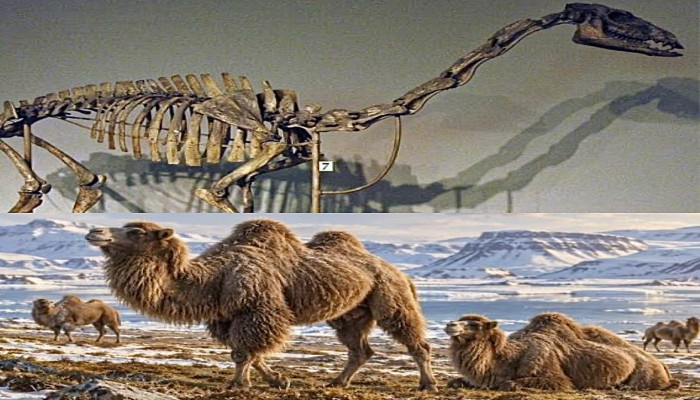
Scientists have uncovered evidence that camels once lived in Canada’s High Arctic, a region that is now too cold for such animals. Fragmented leg bones found on Ellesmere Island in 2006 were later identified as camel remains. The fossils are estimated to be about 3.5 million years old and offer clues about a much warmer Arctic environment during the mid-Pliocene epoch.
Researchers initially struggled to identify the animal from the damaged bones. The fragments were too poorly preserved for conventional palaeontological methods to provide a clear answer. Scientists later turned to collagen fingerprinting, also known as ZooMS. The method examines collagen, a structural protein that can survive in fossilised bones, and compares its molecular pattern with those of known species.
The collagen found in the Ellesmere Island bones matched modern camelids. This evidence, combined with other research, confirmed that the fossils belonged to a camelid. Scientists published their findings in a 2013 study in Nature Communications.
The discovery extended the known northern range of North American camelids by around 1,200 kilometres. It also highlighted how different the Arctic environment was millions of years ago.
The fossil deposits on Ellesmere Island contain plant remains that point to a forested landscape. Researchers have described the ancient environment as a boreal forest. The region would still have experienced long, dark Arctic winters, but temperatures were considerably higher than they are today.
The discovery does not suggest that the High Arctic had a tropical climate. Instead, it indicates that the warmer conditions supported forests and large mammals at a latitude that is now dominated by frozen and barren landscapes.
The camel fossil also adds to the history of camel evolution. Scientists have established that the Camelidae family originated in North America. Camelids later spread to other parts of the world. Modern camels are mainly associated with Africa and Asia, while llamas, alpacas and related species live in South America.
The Ellesmere Island fossils provide evidence that ancient camelids occupied a far wider range of North American environments than their modern relatives. Their presence in the High Arctic shows that these animals were able to survive in environments that were very different from those associated with camels today.
The fossils also contribute to research into ancient climate conditions. Other plant and geological evidence from Ellesmere Island indicates that the region once supported a richer ecosystem. Trees and large mammals could survive there under a climate that differed significantly from the present Arctic.
Scientists cannot reconstruct the entire ancient Arctic environment from the camel fossil alone. However, when studied alongside plant remains and geological evidence, the discovery helps build a clearer picture of the major environmental changes that transformed the region over millions of years.



 Loading...please wait
Comments