




25 US states challenge Trump's new tariffs on imports from 60 countries including India
- In Reports
- 03:18 PM, Aug 04, 2026
- Myind Staff
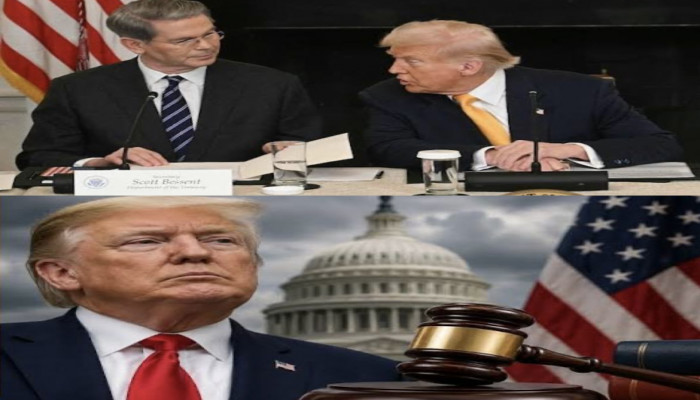
A coalition of 25 Democratic-led US states has filed a lawsuit against President Donald Trump's latest tariffs on imports from 60 trading partners, including India. The legal challenge marks another major test for the Trump administration's trade policy after several earlier tariff measures faced setbacks in US courts. The states claim the administration has once again gone beyond its legal powers while imposing broad import duties.
The lawsuit was filed on Monday in the US Court of International Trade in New York. It challenges tariffs ranging from 10 per cent to 12.5 per cent that came into effect last month under Section 301 of the Trade Act of 1974. The Trump administration introduced these duties, stating that the affected countries have failed to take enough action to stop the export of goods made with forced labour.
The case has become the latest legal battle over Trump's use of tariffs. His administration has continued to defend its trade strategy even after facing repeated challenges in US courts. The lawsuit argues that the White House is trying to bring back broad import taxes through a different legal route after earlier tariff measures were ruled unlawful.
The legal action was brought by 25 states, including Oregon and New York. All the participating states are led by Democratic governors or attorneys general. They argue that Section 301 was never meant to support sweeping tariffs on imports from dozens of countries. According to the complaint, the law has traditionally been used to deal with specific countries or industries accused of unfair trade practices.
The states also claim that the administration is using concerns over forced labour as the basis for reintroducing tariffs that courts had already struck down under previous legal challenges. They believe the government is attempting to achieve the same result through another section of trade law after losing earlier cases.
Oregon Attorney General Dan Rayfield criticised the administration's latest move. He said, "Despite losing every step of the way, Trump is trying yet again to inflict more chaos on working families and homegrown Oregon businesses," as quoted by Reuters.
The disputed tariffs were announced on July 24. They apply to imports from 60 trading partners, including India and the European Union. The administration adjusted tariff rates for some countries after they strengthened enforcement measures related to forced labour. According to a senior administration official, India's tariff was reduced from 12.5 per cent to 10 per cent.
The latest tariff order does not apply to every imported product. Oil, natural gas, fertilisers and goods that qualify for duty-free treatment under the US-Mexico-Canada Agreement have been exempted from the new duties.
US Trade Representative Jamieson Greer defended the administration's decision while announcing the tariffs. He said, "The United States has had a forced labour import ban for nearly a century, and rigorously enforces it; it's well past time for our trading partners to do the same."
The new tariffs represent Trump's latest effort to protect one of the main policies of his economic agenda. His administration has repeatedly turned to different legal provisions after courts questioned earlier tariff programmes.
Earlier this year, the US Supreme Court ruled that the International Emergency Economic Powers Act (IEEPA) did not give the president the authority to impose broad global tariffs. The decision struck down one of Trump's major trade initiatives that relied on emergency powers to impose duties on imports from almost every country.
After that ruling, the administration introduced temporary worldwide tariffs under Section 122 of the Trade Act of 1974. That move also faced legal trouble. The US Court of International Trade ruled those tariffs unlawful. However, the duties remained in effect while the administration appealed the decision.
With both legal options under challenge, the Trump administration has now relied on Section 301 of the Trade Act of 1974. This law has traditionally allowed the US government to respond to unfair or discriminatory trade practices carried out by foreign governments. The administration argues that the current tariffs fall within the authority provided under this section.
Trump also used Section 301 during his first term in office to impose tariffs on China. Those duties survived legal scrutiny since they targeted a single country rather than imposing broad tariffs on imports from multiple trading partners.
Tariffs have remained a central part of Trump's economic strategy. He has consistently argued that higher import duties can strengthen US manufacturing and reshape global trade. Last year, he described America's long-running trade deficit as a national emergency and used emergency powers to introduce tariffs on imports from nearly every country. Those measures were later blocked by the courts.
The latest lawsuit now places Trump's revised tariff policy under fresh judicial scrutiny. The US Court of International Trade will decide whether the administration has the legal authority to use Section 301 for such broad tariffs. The outcome could shape the future of the administration's trade agenda and determine how far presidential powers extend in imposing import duties on foreign goods.



 Loading...please wait
Comments