




215 top academicians write open letter to Priyanka Vadra over her ‘gaumutra’ remark directed at Prof Kamakoti
- In Reports
- 05:56 PM, Jul 31, 2026
- Myind Staff
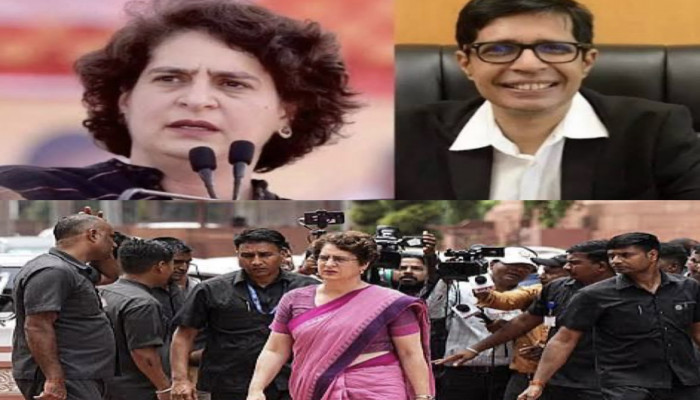
More than 215 vice chancellors, former vice chancellors and senior academicians have expressed support for IIT Madras Director Prof V. Kamakoti after Congress MP Priyanka Gandhi Vadra reportedly referred to him as a "cow urine expert" during a Lok Sabha debate. The academicians issued an open letter and said the remark weakened academic discourse and affected the dignity of India's scientific institutions. They also said such comments could discourage scholars from taking part in public discussions.
The open letter came after Priyanka Gandhi reportedly made the remark while speaking in the Lok Sabha during a discussion on the Centre's proposed task force on examination reforms. The signatories said the issue was not limited to criticism of one individual. They argued that it raised wider concerns about the treatment of scholars and the respect shown to India's academic institutions.
Describing the remark as "deeply disappointing", the vice chancellors said Parliament should remain a place where ideas are discussed seriously and disagreements are expressed respectfully. The letter stated, "Whether intended as sarcasm or political rhetoric, such a characterisation raises concerns that go far beyond one individual." They said public representatives should engage with ideas through meaningful discussion instead of reducing scholars to labels.
Several well-known names signed the letter. These included Nalanda University Vice Chancellor Sachin Chaturvedi, former NITI Aayog Chairman Rajiv Kumar, NAAC Director Ganesan Kannabiran, former UPSC Chairman D. P. Agarwal and former AICTE Chairman Anil Sahasrabudhe. The signatories said they wanted to defend the principles of academic freedom and respectful public debate.
The letter highlighted Prof Kamakoti's academic background and contributions to science and technology. It noted that he leads IIT Madras, one of India's leading scientific and technological institutions. The signatories said his professional achievements reflect years of research and innovation.
According to the letter, Prof Kamakoti earned his MS and PhD degrees in Computer Science and Engineering from IIT Madras. He has authored more than 150 research papers and led over 50 research and development projects. He has also received several honours, including the DRDO Academic Excellence Award and the Indian Electronics and Semiconductor Association Techno Visionary Award. The letter further noted that he played an important role in guiding the development of India's first industry-grade microprocessor.
The academicians said Prof Kamakoti, like every researcher, has the right to present hypotheses, discuss traditional knowledge and participate in scientific debates. They stressed that academic claims should be examined through evidence and discussion instead of personal attacks.
The letter stated, "To dismiss a scholar through a label rather than engage with the substance of his views risks undermining the very scientific temper that our Constitution calls upon every citizen to develop." The signatories said criticism should focus on arguments and evidence instead of targeting an individual's identity or reputation.
The academicians also shared their views on scientific temper. They said scientific thinking does not only involve questioning unusual ideas. It also requires people to examine claims objectively before accepting or rejecting them. They argued that science develops through inquiry, testing and evidence rather than assumptions.
The letter pointed out that history contains many examples of ideas that were first dismissed but later gained scientific acceptance. It also noted that several widely accepted beliefs were eventually proven incorrect after further research. The signatories said this process reflects the true nature of scientific inquiry and should remain open to debate.
The academicians expressed concern that remarks made in Parliament could discourage scientists, researchers and educators from participating in public discussions. They warned that reducing scholars to labels may create hesitation among academics who wish to contribute to important national conversations.
The letter stated, "Our scientists, scholars and educators deserve to know that they can participate in public debate without fear of being reduced to dismissive labels." It added that academic arguments should always remain open to scrutiny and evidence. At the same time, scholarship itself should receive respect.
The signatories concluded by emphasising the importance of civil debate in a democracy. They wrote, "In a democracy, disagreement is essential. Mockery is not a substitute for reasoned engagement," while expressing hope that future discussions in Parliament would reflect the values of respectful, informed and constructive debate.
Prof Kamakoti had earlier faced controversy in January 2025 during Pongal celebrations at a cow shelter in Chennai. During his speech, he narrated the story of a sanyasi who, according to him, recovered from a high fever after drinking cow urine. A video of the speech later went viral and attracted criticism from several scientists, politicians and social media users.
At the time, Prof Kamakoti responded to the criticism and maintained that his comments were based on published scientific literature. The issue remained part of public debate and was later referred to during the recent discussion in Parliament, leading to the open letter signed by more than 215 academicians in his support.



 Loading...please wait
Comments