




2026 Assembly Elections: The Great Political Reset
- In Politics
- 01:50 AM, May 06, 2026
- Ramaharitha Pusarla
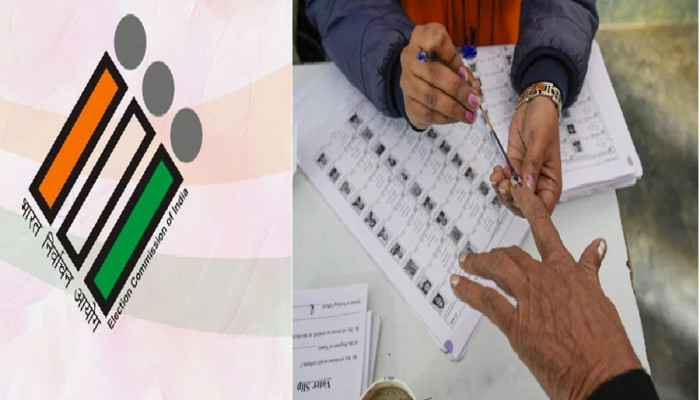
India seems to be in perpetual election mode. With the proposal “One Nation One Election”, to simultaneously hold Lok Sabha and Assembly elections, stifled by the “obstructionist politics” of the opposition, perennial elections have become the unwritten norm of Indian democracy. In the recently concluded elections in four states- Tamil Nadu, West Bengal, Kerala, Assam and the Union territory of Puducherry- nearly 150 million people exercised their franchise, making it a mini referendum. The enormity of the election outcomes is no less than a watershed moment for India’s political landscape.
Three sitting Chief Ministers have lost the elections and been voted out of power- Pinarayi Vijayan of Kerala, Stalin of Tamil Nadu and Mamata Banerjee of West Bengal faced bitter defeats. In all three states, incumbents were ousted. For the first time since India’s independence, coinciding with the ‘naxal-free’ India objective, not a single state has a Communist Party in power. The elimination of Left Wing Extremism or Naxalism and the concomitant loss of political mileage of Leftist political parties marks a transformative shift in India’s internal security. Developmental chokeholds placed by this ideology caused stagnation. The declining stranglehold of this utopian philosophy and its rejection can help integrate these regions into India’s growth engine.
Over several decades, exclusivism, language and regional chauvinism of the Dravidian ideology have bred the North-South divide, threatening India’s unity. Fuelling secessionist tendencies and invoking a sub-nationalist pride, ‘Indian First’ identity was effectively trampled with illusory “Aryan-Dravidian” perspectives. The strong regional identity fostered by the Dravidian movement weakened the national fabric. It effectively roiled the Centre-State relationship as mandated by Article 1 of the Indian Constitution (a quasi-federal structure) and put them on a collision course. Rejection of the Dravidian Parties will mark a significant shift from the 60-year duopoly of these parties over Tamil Nadu. The unexpected stellar victory of a two-year-old political startup, Tamilaga Vettri Kazhagam (TVK), led by actor turned politician Joseph Vijay, dismantled the entrenched regional powers. Absent prior political experience, the state of Tamil Nadu, led by Joseph Vijay, will charter new waters.
TVK’s tsunami-like performance, now a case study for psephologists given his contrarian style of politics, is being hailed as a Gen Z revolution. Analysts note that the fatigued and disillusioned young Tamil voters chose to transform the leadership through the ballot box rather than violent protests to overhaul the political architecture of the state. Their pragmatic choice underscores their faith in the Indian election process and transparency. However, political observers are cautious of the state’s trajectory under the stewardship of an inexperienced politician. Tamil Nadu, long known for its decisive mandate, faces a hung assembly kind of scenario -ushering in a bitter-sweet political journey for the state. Beyond the promise of change, Vijay’s foremost and daunting challenge lies in fulfilling the election pledges, which would entail a staggering financial burden of ₹1.7 lakh crore on the state exchequer, reeling under debt. His first decision to seek Congress party support, an ally of DMK whose misgovernance and corruption Vijay constantly attacked, is already raising eyebrows.
Puducherry voted the incumbent back to power, strengthening continuity and confidence in the leadership.
Securing people’s mandate with an increased majority for the record third time, the BJP has entrenched itself as the most popular party in the state. The landslide victory is a testimony to the overwhelming acceptance of the BJP’s style of governance. With focus on infrastructure development, connectivity and attracting investments, the BJP over the past decade has laid a firm foundation for the long-term development of the state. The thumping victory would strengthen its resolve to free the state from the menace of illegal migrants and protect the indigenous land and cultural identity from the demographic invasion. Assam is the vital connecting link to India’s north-eastern states of Meghalaya, Mizoram, Tripura, Manipur, Nagaland and Arunachal Pradesh.
Illegal infiltration from Myanmar and Bangladesh into the North-Eastern states through the porous border is now a major security and socio-political threat to India. Massive influxes, besides altering demography, are a strain on Indian resources, as administrative and governance machinery have to be stretched to curtail the drug trafficking and regrouping of insurgency groups. Though illegals have been regularly pushed back, they are reentering through the porous borders, presenting a massive security challenge. With some of them permanently gaining ground in West Bengal, run by a complacent and obtrusive government, posing formidable threats to India’s security.
The constant riff-raff with the Central government and brazen indifference towards security threats by the illegals is turning West Bengal into a chink in the country’s security shield. An intransigent and non-cooperative approach, even towards issues like border fencing, has turned the State into a weak link both in terms of security and development. With the entire state machinery and administration collectively tasked with appeasing one community for an assured political term, development has taken a back seat. At the time of independence, the frontier state of West Bengal had been the crown jewel of the country, with a thriving industrial, business and entrepreneurial ecosystem. Political violence, a harrowing law and order situation, has forced industries and businesses to flee the state.
Further, a stubborn reluctance to implement government schemes and prioritise the developmental agenda has pushed the state into economic stagnation. Economic decline has not been sudden; decades of leftist rule and fifteen years of TMC rule have turned the third-largest economy of the country into one of the bottom four. The crushing defeat of TMC and the landslide victory of BJP offer a fresh hope of revival for the state. For BJP, toppling the bastions of development-agnostic TMC is not mere political expediency but a strategic imperative dictated by pressing security threats.
West Bengal serves as the gateway to India’s North East, making its industrial growth and logistical efficiency pivotal for the region’s economic integration and connectivity. The absence of a coherent development vision from the Bengal government is not just stalling the state’s progress- it is impeding the progress of the entire North East. To reduce regional growth disparities, the government is setting up growth corridors and “anchor cities”. However, growth in Eastern India still lags due to the long-term decline of Kolkata as an industrial hub. The roadblocks for growth must be removed to reduce regional disparities and reach the goal of a $7 trillion economy. The Vision of Viksit Bharat 2047 is intrinsically linked to the economic and social transformation of Bengal.
Intense geopolitical conflicts, especially in the Middle East have caused acute energy security vulnerabilities. To remain buoyant amid these uncertainties, nations must be economically resilient. Building a stable economy with consistent growth is no longer a choice, but an undeniable necessity.
The resurgence of Bharat as a developed nation is incomplete without cultural revival. Thirty-four years of Leftist rule that considers “religion is the opium of the masses” and fifteen years of heightened minority appeasement and oppression of Sanatanis have sapped out the cultural vibrancy of the land, which has been an epitome of Indian culture and spirituality. To raise culturally empowered citizenry, it is important to create conditions for cultural revival. This can’t be possible when the indigenous population is treated as second-class citizens for cultivating vote banks.
The unceremonious ouster of Sheikh Hasina and her exodus to India have revealed the larger international agenda at play. The pursuit of a “Christian State” along the Indo-Bangladesh border is not a wild allegation. Conflicts in Manipur since 2023, foreign mercenaries' operations along the Indo-Myanmar border and the surging presence of Islamic fundamentalists abutting West Bengal border areas in Bangladesh are not sporadic events. It is part of a grand plan of Indian adversaries to destabilise and economically weaken India and gain entry to the Bay of Bengal.
Indeed, the cryptic link to this entire master plan becomes more revealing with the Leader of the Opposition’s visit to Andaman and Nicobar Islands in the thick of Bengal elections. While political parties are at loggerheads in the electoral battle, Rahul Gandhi raises objections to the “Great Nicobar Holistic Development Project”, terming it as the “gravest crime against nature”. Geostrategically, India stands to expand its maritime influence and fortify its economic and national security with this project. It would be a game-changer.
India is at a multi-front war from both within and outside. To secure the country from both domestic and foreign threats, stable, sturdy and nationalistic governments must be at the helm. BJP’s aggressive electoral fight is not a mere political contest but a means to realise the lofty national ambition. Mission Bengal is not a political agenda but an economic, social, cultural and national security inevitability. With the power of the vote, Indians are building the nation by entrusting governance with prudence. Ushering in a silent renaissance democratically, Indians have once again rewritten their own developmental script.
Iconically, what was once branded a slogan of defiance and suppressed under threat of legal action, the unapologetic chants of ‘Jai Shri Ram’ now reverberate across Bengal, symbolising freedom. Beneath the exuberant bursts of Joy of election ecstasy in the City of Joy, lay buried the long-silenced stories of repression.
Disclaimer: The opinions expressed within this article are the personal opinions of the author. MyIndMakers is not responsible for the accuracy, completeness, suitability, or validity of any information on this article. All information is provided on an as-is basis. The information, facts or opinions appearing in the article do not reflect the views of MyindMakers and it does not assume any responsibility or liability for the same.



 Loading...please wait
Comments