



193 opposition MPs sign notice seeking motion for removal of Chief Election Commissioner
- In Reports
- 07:25 PM, Mar 12, 2026
- Myind Staff
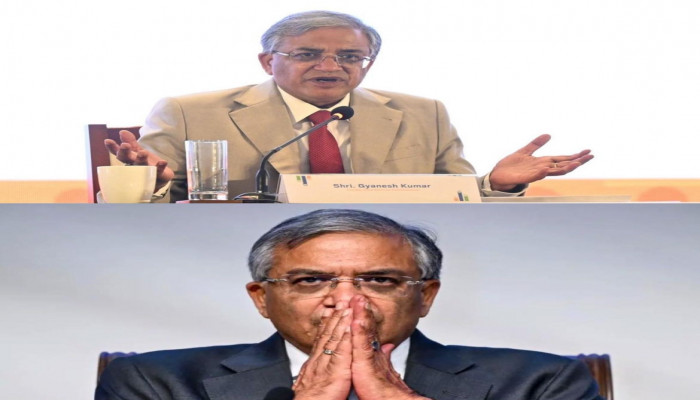
Opposition parties in India have taken a significant political step by signing a notice to initiate a motion seeking the removal of Chief Election Commissioner Gyanesh Kumar. According to sources, 193 Members of Parliament (MPs) from both Houses of Parliament have signed the notice and are preparing to submit it soon.
Among the signatories, around 120 MPs belong to the Lok Sabha, and about 60 MPs are from the Rajya Sabha. Sources said that the process of collecting signatures has already been completed. The notice is expected to be submitted either on Thursday or Friday in both Houses of Parliament.
Opposition leaders stated that the notice includes seven different allegations against the Chief Election Commissioner. These charges reportedly include accusations of acting in a biased and unfair manner while holding office. Other allegations mentioned in the notice include deliberately blocking investigations related to election fraud and causing large numbers of voters to lose their voting rights.
The notice has received support from MPs belonging to several opposition parties that are part of the INDIA bloc. In addition to them, some MPs from the Aam Aadmi Party have also signed the document, even though the party is no longer officially part of the opposition alliance.
Sources said that opposition MPs decided to bring this motion after repeatedly raising concerns about the functioning of the Election Commission under the leadership of the current CEC. Some leaders have claimed that certain actions taken by the Election Commission appeared to benefit the ruling Bharatiya Janata Party.
One of the major issues highlighted by opposition parties is the Special Intensive Revision (SIR) of electoral rolls. According to them, the exercise may lead to the removal of genuine voters from the electoral lists. Opposition leaders have argued that this process could affect voting rights and may influence the fairness of elections.
Concerns have been particularly raised about how the revision exercise is being carried out in West Bengal. The state’s Chief Minister, Mamata Banerjee, has alleged that many genuine voters were removed from the voter lists during the revision process.
According to parliamentary rules, a notice to remove the Chief Election Commissioner must be supported by at least 100 MPs in the Lok Sabha or 50 MPs in the Rajya Sabha. Since the opposition has gathered signatures from well above the required number, they are now eligible to submit the notice formally in Parliament.
The removal of the Chief Election Commissioner follows a constitutional process similar to the procedure used for removing a judge of the Supreme Court of India. A motion seeking removal can be introduced in either House of Parliament. However, it can succeed only if it receives approval with a special majority.
A special majority means a motion must be supported by more than half of the total members of the House and at least two-thirds of the members present and voting. Only if both Houses of Parliament pass the motion with this majority can the Chief Election Commissioner be removed from office.
The law related to the appointment and service conditions of election commissioners clearly states that the Chief Election Commissioner cannot be removed from office except through the same process and on the same grounds as those used for removing a Supreme Court judge. The other election commissioners can only be removed if the Chief Election Commissioner recommends such action.
Under the Judges (Inquiry) Act, 1968, if notices for the motion are submitted on the same day in both Houses, an inquiry committee will be formed only after the motion is accepted in both Houses. Once the notice is admitted, the committee will be jointly created by the Speaker of the Lok Sabha and the Chairman of the Rajya Sabha to examine the allegations.
This move by opposition parties marks an important political development because it is the first time a notice has been brought in Parliament seeking the removal of a Chief Election Commissioner.



 Loading...please wait
Comments