




17% rise in ‘Red Alert’ constituencies and wealthy candidates in West Bengal Assembly polls: ADR report
- In Reports
- 08:15 PM, Apr 22, 2026
- Myind Staff
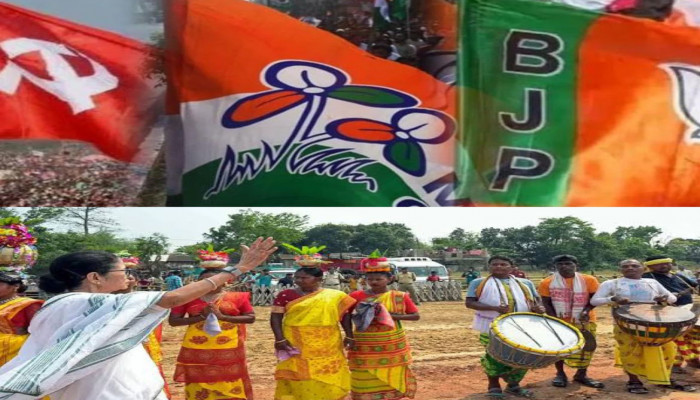
The Association for Democratic Reforms (ADR) has released a detailed report on the West Bengal Assembly Elections 2026, highlighting a noticeable rise in constituencies with multiple candidates facing criminal cases. According to the findings, there are 129 “red alert” constituencies this time, which marks a 17 per cent increase compared to the 2021 elections. These constituencies are defined as seats where three or more candidates contesting have declared criminal cases against themselves.
The report is based on an analysis of 2,920 candidates contesting in the elections. It reveals that 683 candidates, which accounts for 23 per cent, have declared criminal cases in their affidavits. Among them, 589 candidates, or 20 per cent, are facing serious criminal charges. In comparison, during the 2021 elections, 528 out of 2,130 candidates, or 25 per cent, had declared criminal cases, while 431 candidates, or 20 per cent, were facing serious criminal cases. This shows that while the overall percentage has slightly decreased, the absolute number of candidates with criminal backgrounds remains high.
Among political parties, the Bharatiya Janata Party has the highest number of candidates with declared criminal cases. Out of 293 candidates analysed, 208, or 71 per cent, have reported such cases. The Indian National Congress has 76 candidates, or 26 per cent, with criminal cases out of 293 analysed. The All India Trinamool Congress has 112 candidates, or 39 per cent, out of 290, while the Communist Party of India (Marxist) has 94 candidates, or 47 per cent, out of 198. Other parties, such as the All India Forward Bloc and the Communist Party of India, also have candidates with declared criminal cases, though in smaller numbers.
When it comes to serious criminal cases, the BJP again leads with 188 candidates, or 64 per cent, declaring such cases. The Congress has 63 candidates, or 22 per cent, the TMC has 90 candidates, or 31 per cent, and CPI(M) has 78 candidates, or 39 per cent. The All India Forward Bloc and CPI also have a few candidates facing serious charges.
The ADR report also highlights that 192 candidates have declared cases related to crimes against women. Out of these, eight candidates have reported cases related to rape, including instances of repeated offences. Additionally, 35 candidates have declared cases of murder, while 185 candidates have declared cases of attempt to murder. These figures indicate the presence of serious allegations among a significant number of candidates.
The number of “red alert” constituencies has increased notably. Out of 294 constituencies, 129, or 44 per cent, fall under this category. In the 2021 elections, only 78 constituencies, or 27 per cent, were classified as red alert. This sharp rise reflects a growing concern about the criminal background of candidates contesting elections.
The report also sheds light on the financial background of candidates. Out of the total candidates analysed, 629, or 22 per cent, are crorepatis. This is an increase from 18 per cent in the previous elections. Among major parties, the TMC has the highest number of wealthy candidates, with 209 out of 290 candidates, or 72 per cent, declaring assets worth more than Rs 1 crore. The BJP follows with 143 candidates, or 49 per cent, while Congress and CPI(M) each have 29 per cent of their candidates in this category. The All India Forward Bloc and CPI have relatively fewer crorepati candidates.
The average assets per candidate have also increased significantly. In the 2026 elections, the average assets stand at Rs 1.27 crore, compared to Rs 91.69 lakh in 2021. Among major parties, TMC candidates have the highest average assets at Rs 5.39 crore, followed by BJP candidates with Rs 2.91 crore and Congress candidates with Rs 1.56 crore. CPI(M), All India Forward Bloc, and CPI candidates have comparatively lower average assets.
Interestingly, there are four candidates who have declared zero assets. These include independent candidate Mousumi Ghosh from Behala Paschim, Welfare Party of India’s Sahajadi Parvin from Uluberia Purba, and Aam Janata Unnayan Party’s Asif Hussain and Sk Habib from Howrah Madhya and Uluberia Dakshin, respectively.
In terms of gender representation, only 385 candidates, or 13 per cent, are women in the 2026 elections. This is a slight increase from the 2021 elections, where 240 candidates, or 11 per cent, were women. Despite the rise, the overall representation of women remains low.
The educational background of candidates shows that 1,354 candidates, or 46 per cent, have studied between the 5th and 12th standard. A total of 1,419 candidates, or 49 per cent, have declared themselves as graduates or above. Additionally, 49 candidates are diploma holders, 68 candidates have declared themselves literate, and 30 candidates are illiterate.
The age distribution indicates that 854 candidates, or 29 per cent, are between 25 and 40 years. A majority, 1,567 candidates, or 54 per cent, fall in the 41 to 60 years age group. Meanwhile, 495 candidates, or 17 per cent, are between 61 and 80 years, and four candidates are above 80 years of age.
Overall, the ADR report presents a detailed picture of the candidates contesting the West Bengal Assembly Elections 2026. It highlights key trends such as the rise in red alert constituencies, the continued presence of candidates with criminal cases, increasing wealth among contestants, and limited representation of women.



 Loading...please wait
Comments