




11 Bills passed, 19% productivity: Parliament’s monsoon session ends amid disruptions
- In Reports
- 06:59 PM, Aug 13, 2026
- Myind Staff
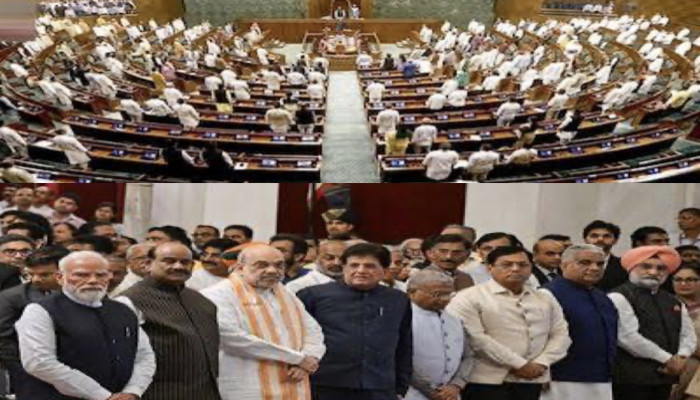
The Lok Sabha ended its Monsoon Session on Thursday after a final sitting that lasted only a few minutes. The House assembled at 11am for its last sitting, with Opposition MPs raising slogans over the police action against protesting students on July 20. The Treasury benches responded with counter-slogans. Prime Minister Narendra Modi then entered the House as members stood for the national song, Vande Mataram. Speaker Om Birla later announced, “The House is adjourned sine die."
The Lok Sabha remained quiet for about three minutes and 10 seconds before the session ended. The brief silence came after weeks of protests, disruptions and stalled proceedings. The Opposition and government remained divided over several issues throughout the session.
The Monsoon Session was scheduled for 19 sittings from July 20 to August 13. PRS Legislative Research had listed 28 Bills as pending when the session began. By the end of the session, the government had secured the passage of 11 Bills in the Lok Sabha. However, the amount of time spent debating several of these Bills remained limited.
The Public Examination law received around 11 hours of debate. It seeks to strengthen action against malpractice in examinations. Several other Bills passed with only a few minutes of discussion. The MSME Development Amendment Bill and the Taxation and Other Laws Amendment Bill took three minutes each. The Registration of Births and Deaths Amendment Bill, the Supreme Court (Number of Judges) Amendment Bill and the Kerala (Alteration of Name) Bill took four minutes each.
The Bankers’ Books Evidence Bill and the Mines and Minerals Amendment Bill took five minutes each. The Tribunals Reforms Bill received 12 minutes of discussion. The Prevention of Insults to National Honour Amendment Bill took 14 minutes. The Bills were passed through voice votes amid Opposition sloganeering.
Question Hour also faced repeated disruptions during the session. It allows MPs to directly question ministers on government policies, decisions, schemes and issues affecting their constituencies. By August 10, the Lok Sabha had failed to complete Question Hour for three consecutive weeks. That day marked the 16th day of the session on which Question Hour could not be completed.
The disruption of Question Hour is not a new issue in Parliament. Previous sessions have also seen proceedings affected by protests and disruptions, limiting the time available for MPs to question the government.
The Opposition entered the Monsoon Session seeking discussions on several major issues. These included the NEET-UG controversy and allegations regarding the theft of donations at the Ram temple in Ayodhya. In the final days of the session, the focus shifted to the police action against students protesting in Delhi.
The government said it was willing to discuss the issue involving the students. On Wednesday, Union Home Minister Amit Shah offered to take part in a debate and respond to questions from the Opposition. The Opposition rejected the offer and continued to demand his resignation. Leader of Opposition Rahul Gandhi said responsibility for the police action ultimately rested with the Home Ministry.
The disagreement continued into the final day. Opposition MPs again raised slogans when the Lok Sabha met on Thursday. The session ended without a resolution to the political deadlock over the issue.
Parliamentary Affairs Minister Kiren Rijiju said on Thursday that Lok Sabha productivity stood at 19 per cent. Rajya Sabha productivity was 39 per cent. The session did not set a new record for parliamentary disruption, but the figures reflected the limited amount of productive time available to both Houses.
The FCRA Amendment Bill offered a different approach to handling a politically sensitive issue. The Opposition accused the government of targeting NGOs and minorities through the proposed changes. Instead of passing the Bill quickly, the government agreed to send it to a Joint Parliamentary Committee.
The committee route gives MPs and other stakeholders more time to examine the proposed provisions. It also gives the government an opportunity to consider objections before the Bill returns to Parliament. The FCRA Bill therefore showed that political disagreements can also move through scrutiny and committee examination before a final debate and decision.
The Monsoon Session ended with 11 Bills passed by the Lok Sabha, but repeated disruptions reduced the time available for detailed debate and Question Hour. The final three-minute silence after weeks of protests offered a brief and striking close to a session marked by political confrontation, limited legislative debate and low productivity.



 Loading...please wait
Comments