




India plans ₹45,000 crore border rail expansion to boost connectivity and strategic readiness
- In Reports
- 04:31 PM, Aug 03, 2026
- Myind Staff
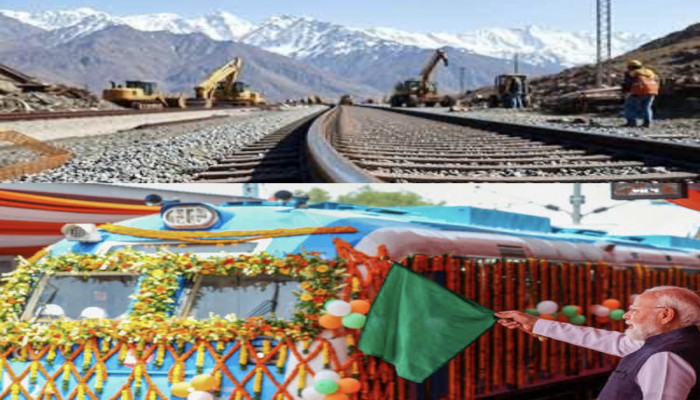
India is preparing a major railway infrastructure programme worth up to ₹45,000 crore to strengthen connectivity along its borders with China, Pakistan and Bangladesh. According to people familiar with the matter, the investment will support new railway tracks, platforms and network upgrades across key border states. The project is expected to roll out over the next 18 to 24 months and marks one of the country's biggest strategic infrastructure initiatives in recent years.
The planned upgrades will cover Punjab, West Bengal, Himachal Pradesh, Rajasthan, Assam and several northeastern states. Officials familiar with the discussions said the programme aims to improve rail connectivity to regions located close to India's international borders. The investment will also strengthen railway capacity in these strategically important areas.
According to the people, the border railway programme will account for nearly 22 per cent of India's total railway infrastructure spending planned over the next two years. This highlights the scale of the government's focus on improving transport links in sensitive border regions.
The latest proposal expands the government's long-term border infrastructure strategy. It goes beyond the $3.4 billion investment reported by Bloomberg News in September for railway construction projects in the northeastern region. That earlier plan included the construction of new railway lines along with bridges and tunnels to improve connectivity in difficult terrain.
India's renewed focus on border infrastructure comes at a time when the country's relationships with its neighbouring nations continue to evolve. Relations with China have normalised since the deadly border clash that took place six years ago. India also experienced a brief conflict with Pakistan last year. At the same time, political developments in Bangladesh during 2024 have made a previously stable partnership more challenging.
India's Railway Ministry did not respond to an email seeking comments on the proposed investment plan.
The railway expansion is expected to create dual-use infrastructure. While the railway network will improve civilian transportation, it will also support military logistics whenever required. The upgraded rail system will help move troops, equipment and supplies more efficiently. It will also improve transport facilities for people living in border districts that have remained underdeveloped for many years.
The project will strengthen high-capacity, all-weather railway networks in several strategically important locations. These include the Himalayan region, the Siliguri Corridor and the northeastern states. Better railway connectivity in these areas is expected to reduce troop mobilisation time and improve supply chain reliability during emergencies or security operations.
The Narendra Modi government has already placed significant emphasis on infrastructure development in border regions. It has approved the construction of around 1,450 kilometres of new roads along the Pakistan border. The government has also carried out infrastructure upgrades near Doklam, a plateau close to the Indian border.
Last year, Prime Minister Narendra Modi inaugurated the world's tallest railway bridge, connecting the Kashmir Valley with the rest of the country. The bridge is considered an important milestone in improving transport and connectivity in the region.
Officials familiar with the developments said the government has also expanded railway infrastructure in the Northeast over the past decade. Around 1,700 kilometres of new railway lines have been added during this period, improving connectivity across several states in the region.
Apart from railway development, India has revived Advance Landing Grounds in its northeastern territories. These airstrips had remained inactive since 1962. They are now being upgraded for use by helicopters and military aircraft, further strengthening transport and defence infrastructure in the region, according to the people.
China has also accelerated infrastructure construction along its side of the border following the military stand-off at Doklam in 2017. The country has developed dual-use facilities, including airports and heliports, which support both civilian and military operations. These projects have improved the logistics capabilities of the People's Liberation Army by allowing faster movement of troops and military equipment.
India's proposed ₹45,000 crore railway programme reflects a broader effort to improve connectivity in border areas while strengthening national security. The project is expected to enhance transportation for local communities, improve military logistics and support long-term infrastructure development across some of the country's most strategically important regions.



 Loading...please wait
Comments