



Iran lists three conditions to end ongoing war with US and Israel
- In Reports
- 05:37 PM, Mar 12, 2026
- Myind Staff
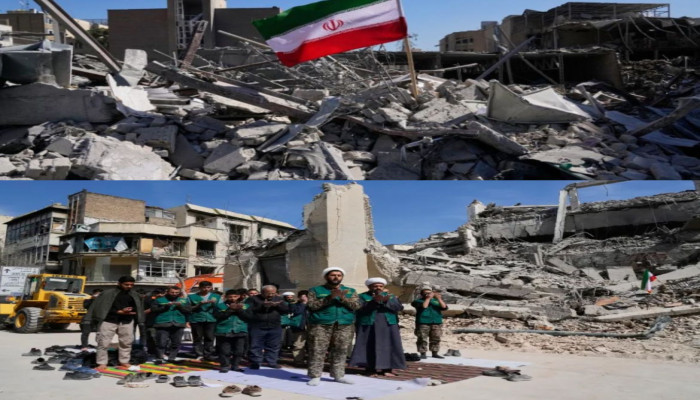
Iranian President Masoud Pezeshkian has stated that the ongoing conflict between Iran, the United States, and Israel can only end if three specific conditions are fulfilled. He said that Iran remains committed to peace in the region but expects its rights to be respected and protected.
In a message shared on the social media platform X, Pezeshkian explained that the war could only come to an end if Iran’s legitimate rights are recognised, compensation is provided for the damage caused during the conflict, and strong international guarantees are given to ensure that similar attacks do not happen again in the future.
The Iranian leader emphasised that these steps are necessary for restoring peace and stability. According to him, recognition of Iran’s rights and security is an important part of any possible agreement to end the war.
His statement came at a time when tensions in the Middle East remain extremely high following continued military exchanges between Iran, the United States and Israel. The situation has raised concerns about further escalation in the region.
Earlier, Iran’s armed forces warned that they would respond strongly if the United States carried out attacks on Iranian ports. The warning was issued by Abolfazl Shekarchi, spokesperson for Iran’s armed forces, during an interview with state-run IRIB television.
Shekarchi stated that if Washington decided to strike Iranian port facilities, Iran would not hold back in its response. He indicated that the country’s military has the capability to target important locations across the Persian Gulf region.
According to him, if such an attack takes place, Iran could strike ports, economic centres or other strategic sites in the Persian Gulf. His comments signalled that Tehran is prepared to expand its military response if the conflict continues to intensify.
These remarks came after the US Central Command posted a warning in Persian language on X. The message advised civilians in Iran to stay away from port areas where Iranian naval activities were taking place.
The advisory suggested that such areas could potentially become targets during military operations. As a result, people were urged to avoid these locations for their safety.
The current conflict escalated after joint military attacks by the United States and Israel were launched on February 28. These strikes targeted Tehran as well as several other Iranian cities.
The attacks resulted in the death of Iran’s then Supreme Leader, Ayatollah Ali Khamenei, along with several senior military commanders and civilians. The strikes marked a major turning point in the conflict and significantly increased tensions across the region.
Following these attacks, Iran responded with military retaliation. The country launched several missile and drone strikes aimed at Israeli targets and other locations connected to the United States across the Middle East.
These counterattacks further intensified the conflict and raised fears of a wider regional war. The ongoing exchanges of strikes between the involved parties have made the region unstable.
Despite the rising tensions, Iran has indicated that it is still open to ending the war if its conditions are accepted. The government has made it clear that recognition of Iran’s rights, compensation for the destruction caused during the conflict, and reliable international guarantees against future aggression are essential for any peace agreement.
For now, however, the conflict continues, and the possibility of further escalation remains a major concern for the region and the international community.



 Loading...please wait
Comments