




India to impose penalties on HAL for Tejas delivery delays
- In Reports
- 05:43 PM, Jun 09, 2026
- Myind Staff
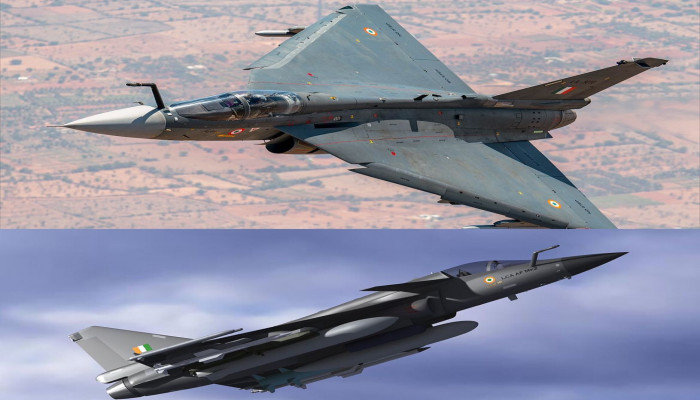
The Ministry of Defence is considering imposing penalties on state-owned Hindustan Aeronautics Limited (HAL) due to continued delays in the delivery of Tejas Mk1A fighter aircraft to the Indian Air Force (IAF). According to defence sources quoted by ToI, the issue was discussed during a high-level meeting chaired by Defence Minister Rajnath Singh on Monday. Despite repeated timelines, HAL has not delivered a single Tejas Mk1A aircraft to the IAF so far.
The delay has become a matter of concern for the government, especially because HAL has already received several engines required for the aircraft. Officials pointed out that six engines from General Electric (GE) Aerospace have already been delivered to HAL. In addition, the structures of 18 aircraft are reportedly ready.
Explaining the government's position, the sources said, “At least six engines from General Electric (GE) Aerospace have already been received by HAL for Tejas. The structures of 18 aircraft are also ready with it. We can understand the delays in engine delivery on the part of GE, but that is a separate issue. However, as the six GE engines had already arrived, HAL should have delivered at least six aircraft to the IAF by now. Due to the delay, there could be liquidated damages (LD) being applied.”
Officials noted that defence contracts generally include fixed delivery schedules. Companies that fail to meet these commitments can face liquidated damages, which are financial penalties for delays in execution. The possibility of applying such penalties to HAL is now under consideration as the ministry reviews the progress of the Tejas programme.
The government is also expecting HAL to speed up production and make up for lost time. According to officials, a significant number of aircraft could be ready by the end of the year if the company addresses the remaining shortcomings.
“At least 18-24 LCA Mk1A aircraft are expected to be ready by the end of the year if HAL is able to make up for some of those shortfalls (Air Staff Qualitative Requirements). HAL has been asked to meet the commitments and timelines,” the sources added.
The IAF has placed major orders for the Tejas aircraft as part of its effort to strengthen its fighter fleet. In 2021, the Air Force signed a contract with HAL for 83 Tejas Mk1A jets. A second agreement was signed in 2025 for another 97 aircraft. Together, the two contracts cover the delivery of 180 Tejas fighters.
The programme has also faced challenges due to delays in engine supplies from GE Aerospace. Earlier this year, HAL imposed contractual penalties on the American company for delays in the delivery of F404-IN20 engines used in the Tejas Mk1A aircraft. However, officials now believe that HAL should have delivered at least some aircraft after receiving the first batch of engines.
Apart from the Tejas programme, discussions are also continuing on future fighter aircraft acquisitions. One of the topics being examined is Russia’s proposal to offer its Su-57 stealth fighter aircraft to India. However, officials clarified that no final decision has been taken on the matter.
“There are discussions, but no decision has been made on Russia’s offer yet.”
At the same time, HAL is moving ahead with plans related to the more advanced GE-414 engine. This engine is expected to power several future Indian fighter aircraft projects, including the Tejas Mk2 and the Advanced Medium Combat Aircraft (AMCA) programme. Officials said technical discussions between HAL and GE have already been completed, while commercial negotiations are still underway.
“Technical negotiations have been completed. Commercial negotiations are going on,” the sources said.
Officials highlighted that the GE-414 engine is expected to play an important role in India's future air combat capabilities. It will not only power the Tejas Mk2 but is also planned for the initial variants of the AMCA, India's ambitious indigenous stealth fighter programme.
Meanwhile, the process for AMCA development is also progressing. The government recently issued a Request for Proposal (RFP) for the project. Officials said the next stage will begin once responses are received from interested participants.
“RFP for AMCA was issued 10 days ago. It has a time of 60 days. The responses should come by the end of July. After that, the rest of the process will be done.”
With the Tejas programme facing delivery delays and the government closely monitoring progress, HAL is under increasing pressure to meet its commitments. The coming months will be crucial as the company works to deliver aircraft to the IAF while also advancing key future fighter programmes such as the Tejas Mk2 and AMCA.



 Loading...please wait
Comments