




Delhi Gymkhana Club and the Last Bastion of Colonial Privilege: Why Bharat Must Decolonise Its Institutions
- In Current Affairs
- 12:27 PM, May 27, 2026
- Siddhartha Dave
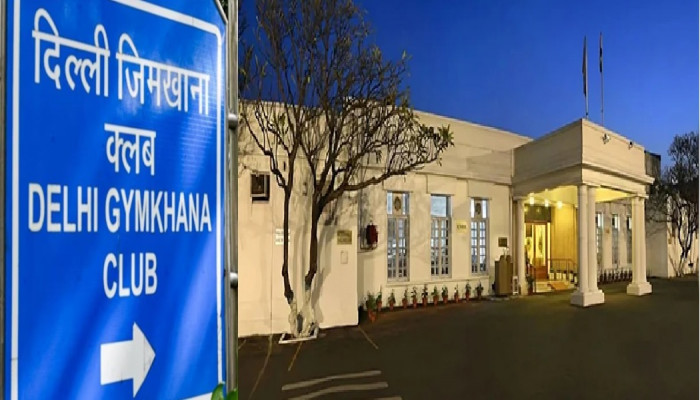
In the heart of Lutyens’ Delhi, amidst sprawling lawns, colonial architecture, and manicured avenues, stands an institution that has long embodied power, privilege, and exclusivity—the Delhi Gymkhana Club. For over a century, it has served as a social sanctuary for ruling elites, first of the British Raj and later of independent Bharat’s political, bureaucratic, military, and corporate establishment.
Today, however, the future of the Delhi Gymkhana Club has become the subject of intense public debate. The government's decision to reclaim the 27.3-acre prime property adjoining the Prime Minister's residence has triggered predictable outrage among sections of the elite. Yet beneath the legal arguments lies a far larger question: can a nation aspiring to become a civilisational state continue to subsidise institutions born out of colonial hierarchy and exclusivity?
The controversy is not merely about a club. It is about the unfinished project of decolonisation.
An Institution Born to Serve the Empire
The story begins in 1911 when King George V announced the transfer of the capital of British India from Calcutta (now, the name corrected to Kolkata) to Delhi. As the British prepared to build New Delhi, they also sought to recreate the social ecosystem necessary for imperial governance.
The Imperial Delhi Gymkhana Club was established in 1913 as an exclusive recreational space for British officers, senior administrators, and select aristocratic allies. Its very name reflected its purpose—it was not intended to serve Indians but to provide a familiar social environment for the colonial ruling class.
The club's eventual relocation to Safdarjung Road in the newly built imperial capital was symbolic. Situated amidst the grand architecture designed by Edwin Lutyens and his associates, the club became an extension of colonial authority itself. The imposing building designed by Robert Tor Russell complemented the imperial vision of New Delhi—a city created not for democratic participation but for imperial administration.
Even its membership reflected colonial hierarchies. Entry into the club was a badge of acceptance into the ruling establishment. For the handful of Indians who entered the Indian Civil Service, social assimilation often became a prerequisite. Mastery of British etiquette, dress codes, dining habits, ballroom dancing, and club culture became markers of advancement within the colonial order.
The Gymkhana was not merely a recreational facility; it was a cultural institution designed to reproduce imperial values.
The Colonial Mindset Survived Independence
Political independence arrived in 1947, but institutional decolonisation remained incomplete.
The word “Imperial” disappeared from the club's name, yet much of its character remained intact. The British rulers departed, but a new class inherited the privileges they left behind. The elite networks that once connected colonial administrators gradually transformed into networks linking politicians, senior bureaucrats, judges, diplomats, military officers, and corporate executives.
In many ways, the Delhi Gymkhana became the quintessential symbol of the “Brown Sahib” phenomenon—a colonial institution operating under Indian management.
The dress codes changed. Indian dishes appeared on the menu. Bandhgalas replaced tuxedos. Yet the deeper structure of exclusivity survived.
Membership waiting periods stretched into decades. Admission often depended less on merit and more on social connections, lineage, recommendations, and elite networks. Generations of influential families maintained access to facilities situated on some of the most expensive public land in the country.
The symbolism was unmistakable: while democratic Bharat expanded opportunities for millions, some of the most valuable public assets remained reserved for a tiny social circle.
The Economics of Privilege
The debate surrounding the Delhi Gymkhana is often framed as an attack on heritage. But heritage cannot become a permanent justification for public subsidy.
The central issue is straightforward: should taxpayers continue subsidising an exclusive private club occupying prime government land worth thousands of crores?
Ordinary citizens pay market rates for housing, commercial establishments, recreational facilities, and sports infrastructure. Small entrepreneurs struggle under rising rents. Young professionals often spend years searching for affordable housing in metropolitan cities.
Yet a private club catering to a limited membership has enjoyed extraordinarily favourable terms on premium public land in one of the most secure and expensive zones of the national capital.
No one's membership is being confiscated. No one is being denied the freedom to form private associations. The issue is whether taxpayers should continue underwriting the lifestyle benefits enjoyed by a privileged few.
The argument that a historical institution must automatically retain subsidised access to public assets indefinitely is difficult to justify in a modern republic.
Citizens are increasingly unwilling to fund, through indirect subsidy, exclusive swimming pools, subsidised dining, private social events, and elite recreational facilities when public infrastructure demands remain substantial.
The resentment is understandable.
A Security Question That Cannot Be Ignored
Beyond economics lies an equally significant issue—national security.
The Gymkhana's location is unique. It occupies land adjacent to one of the most sensitive security zones in the country, in close proximity to the Prime Minister's residence and key governmental establishments.
The security environment of 2026 bears little resemblance to that of 1913 or even 1990. Contemporary threats include sophisticated surveillance operations, cyber-enabled intelligence gathering, drone-based reconnaissance, insider threats, transnational terrorism, and hybrid warfare.
In such circumstances, unrestricted recreational activity adjacent to critical leadership infrastructure naturally raises legitimate security concerns.
Modern states routinely reassess land use surrounding strategic installations. Security perimeters evolve according to changing threat perceptions. What may have been acceptable decades ago may no longer be prudent today.
Critics dismiss security concerns as exaggerated. Yet responsible governance demands anticipation rather than reaction. National security planning is often judged not by visible threats but by vulnerabilities successfully eliminated before they can be exploited.
The state has an obligation to prioritise strategic requirements over recreational convenience.
Decolonisation Is More Than Renaming Roads (Read name corrections)
For years, Bharat's decolonisation efforts focused largely on symbolic changes— restoring indigenous/original place names and reclaiming historical narratives. These measures were important, but they represent only the surface of a deeper challenge.
True decolonisation requires examining institutions, privileges, and mindsets inherited from the colonial era.
Many colonial institutions were created to separate rulers from the ruled. Exclusive clubs, civil service social circles, and restricted access zones were all designed to reinforce hierarchy.
Independent Bharat cannot indefinitely preserve every colonial-era arrangement merely because it has become familiar.
The question is not whether the Delhi Gymkhana possesses historical significance. It undoubtedly does.
The real question is whether historical significance should override contemporary public interest.
Museums preserve history. Archives preserve history. Heritage buildings preserve history.
But preserving history does not necessarily require perpetuating colonial-era privilege on public land.
Time to Choose Between Nostalgia and Nationhood
The debate over the Delhi Gymkhana Club ultimately reflects a larger national choice.
Should Bharat continue protecting islands of inherited privilege simply because influential people enjoy them? Or should public resources be aligned with broader national priorities, democratic principles, and security requirements?
A confident civilisation does not fear history. It studies it, preserves it, and learns from it. But it does not remain imprisoned by it.
The Delhi Gymkhana Club is free to continue as a private institution. Its members are free to associate, socialise, dine, swim, play sports, and maintain their traditions. What is under question is not their freedom but their continued occupation of exceptionally valuable public land at highly favourable terms.
For too long, colonial legacies have survived not because they serve the nation but because they serve those who inherited them.
The government's decision to reclaim the land, therefore, deserves support. It signals that public assets must serve public purposes, that national security considerations cannot be subordinated to elite convenience, and that colonial-era privileges cannot remain beyond scrutiny merely because they have existed for decades.
More importantly, it sends a broader message: Bharat's decolonisation cannot remain confined to textbooks and speeches. It must extend to institutions, spaces, and structures that continue to embody an outdated culture of entitlement.
The Delhi Gymkhana controversy is therefore not simply about a club. It is about whether a rising Bharat is prepared to finally move beyond the shadow of Empire and build institutions rooted in the principles of a democratic, self-confident, and civilisational nation.
Jai Hind.
PS: This article was first published at https://organiser.org/author/siddhartha-dave/
Disclaimer: The opinions expressed within this article are the personal opinions of the author. MyIndMakers is not responsible for the accuracy, completeness, suitability, or validity of any information on this article. All information is provided on an as-is basis. The information, facts or opinions appearing in the article do not reflect the views of MyindMakers and it does not assume any responsibility or liability for the same.



 Loading...please wait
Comments